...SIŁA I PIĘKNO MUZYKI TKWIĄ W JEJ RÓŻNORODNOŚCI...
Następca "On the Corner" spotkał się z raczej chłodnym przyjęciem. Głównym powodem takiego stanu rzeczy był fakt, że album "Big Fun" wypełniają nagrania dokonane w różnych składach, na przestrzeni czterech lat (1969-72). Nie jest to jednak zbiór odrzutów. Są to utwory, które powstały pomiędzy sesjami nagraniowymi konkretnych albumów i po prostu nie pasowałyby do charakteru żadnego z nich. Co więcej, wszystkie nagrania zostały specjalnie na to wydawnictwo zmiksowane przez producenta Teo Macero (szczególnie napracował się w przypadku "Go Ahead John", sprytnie skompilowanego z kilku jamów muzyków), a wcześniej dobrane w taki sposób, aby tworzyć spójną całość.
"Big Fun" składa się z czterech utworów, w tym dwóch niemal półgodzinnych i dwóch lekko przekraczających 21 minut. Na oryginalnym, winylowym wydaniu każdy z nich zajmuje jedną stronę tego dwupłytowego wydawnictwa. Większość materiału została zarejestrowana pomiędzy sesjami do albumów "Bitches Brew" i "Jack Johnson", a jeden w okresie "On the Corner".
Najstarsze nagrania, czyli "Great Expectations" (w rzeczywistości są to połączone dwa utwory zarejestrowane tego samego dnia: "Great Expectations" i "Orange Lady") z listopada 1969 roku i "Lonely Fire" ze stycznia 1970 roku, zostały zarejestrowane w podobnym, rozbudowanym składzie, co "Bitches Brew", lecz dodatkowo poszerzonym o indyjskich muzyków: Khalila Balakrishnę (sitar) i - tylko w pierwszym z nich - Bihariego Sharimę (tambura, tabla). Pod względem muzycznym nagrania te nie mają właściwie nic wspólnego z ciężkim fusion z "Bitches Brew". Bliżej im do elektrycznego jazzu o ambientowym klimacie, znanego z "In a Silent Way". To pozornie monotonna, hipnotyzująca muzyka o medytacyjnym charakterze, zaczerpniętym z muzyki hindustańskiej. "Orange Lady" pod względem subtelności i nastroju przypomina utwór tytułowy z "In a Silent Way"; w "Great Expectations" i "Lonely Fire" transowy charakter został połączony z większą dynamiką.
"Go Ahead John", zarejestrowany w marcu 1970 roku, utrzymany jest już w jazzrockowej stylistyce "Jacka Johnsona". W przeciwieństwie do pozostałych utworów z "Big Fun", nagrany został w małym, zaledwie pięcioosobowym składzie - tylko trąbka, saksofon, elektryczna gitara i gitara basowa, oraz perkusja. Była to jedna z niewielu sesji Davisa bez udziału muzyka grającego na klawiszach. Gra sekcji rytmicznej Holland/DeJohnette ma funkowy puls, a gitarowe zagrywki McLaughlina zdecydowanie rockowo-bluesowy charakter. Lecz mimo tego, utwór dobrze wpisuje się w hipnotyczny klimat całości.
W powyższych utworach Davisa wciąż wspierali głównie muzycy o jazzowych korzeniach. W chwili wydania "Big Fun", większość z nich skupiała się już na własnych projektach, kontynuując w nich elektryczne eksperymenty Milesa: Wayne Shorter i Joe Zawinul w Weather Report, Herbie Hancock i Bennie Maupin w Mwandishi, a potem w The Headhunters, Chick Corea w Return to Forever, John McLaughlin i Billy Cobham w Mahavishnu Orchestra, a Jack DeJohnette w Directions. Inni rozpoczęli lub kontynuowali kariery solowe (niektórzy z nich, jak Dave Holland, całkowicie stronili od elektrycznego grania). Sesja nagraniowa "On the Corner" była ostatnią, podczas której Davisowi towarzyszyli dawni współpracownicy (Hancock, McLaughlin, DeJohnette, Maupin). W tamtym czasie trębacz zaczął budować zupełnie nowy skład, do którego ściągał muzyków z zespołów funkowych.
Wczesna wersja tego składu (w której ostał się jeszcze Maupin) w czerwcu 1972 roku - zaraz po zakończeniu głównej sesji nagraniowej "On the Corner" - zarejestrowała kompozycję "Ife". Choć nie odchodzi ona daleko od stylistyki wspomnianego przed chwilą albumu, jest znacznie bardziej przystępna. Opiera się na rewelacyjnym basowym motywie Michaela Hendersona, który pomimo hipnotyzującej repetycyjności, jest zarazem bardzo chwytliwy i nadaje niemal tanecznego charakteru. Linia basu stanowi perfekcyjną oś, wokół której pozostali instrumentaliści grają swoje porywające partie. W zamyśle utwór w całości miał się opierać na jednym rytmie, ale z powodu pomyłki któregoś z muzyków, został on w pewnym momencie przełamany, co niespodziewanie dało naprawdę interesujący efekt.
"Big Fun" zdecydowanie nie brzmi jak zbiór odrzutów. To pełnoprawny album, całkiem spójny, mający swój własny charakter. Na korzyść działa nawet to, że poszczególne utwory zostały zarejestrowane w różnych składach - dzięki temu, można tu usłyszeć więcej wybitnych instrumentalistów, niż na jakimkolwiek innym longplayu Milesa Davisa.
Paweł Pałasz
This album is Big Fun. The first Miles Davis album I bought. This one always gets me. I love the Indian music influence. This is some of the most serious jazz-rock I've ever heard. It's haunting, it's funky, it's mystical, it's quite energetic, especially when Billy Cobham's behind the set. Not to mention looking at the personnel will make your head implode, as so many Miles Davis albums do. If you're even remotely familiar with jazz-rock/fusion, or jazz in general, you will have heard of at least 3-4 of the names besides Davis; maybe more. This is a must hear for any jazz fusion fan. It's a shame it was not released when it was supposed to be, not long after Bitches Brew. Instead it came out a few years later, and is not mentioned as much for some reason. When I was deciding which Miles Davis album to buy first, it was tough. I then saw the cover for this album, and I did not know this album existed before that moment. I saw the title Big Fun and picked it up immediately. I don't know why, but i basically bought the album because of the title, which I dont really do often. It was a great decision, because I was into jazz-rock for a while before I decided to check out Miles Davis' music. I had heard a few songs, but not much, and most of them were his jazz songs. I think this was a great first album to check out. It's a long album (2 discs, but a lot of his 70s albums are), but you dont even realize it, and you'll be taken in by the music.
I love the sitar and percussion work a lot. Miles Davis always had a great percussion section during this time.
Great Expectations is EPIC!!!! A 27 minute opus. It is haunting, yet intriguing. It is like a long journey, filled with danger and adventure. The middle is dark, reminds me of the night. The melody is great. The next section is one of the most beautiful pieces of music I've ever heard. Listening to this is so great. The melody from before returns. This an epic song, the only way I can describe it.
Ife is great on here. When this one is played live, it's a little different. Here the Rhythms between the bass and drums constantly switches and makes for a serious jazz-fusion song.
Recollections and Trevere remind me a little of Bitches Brew, but with more Indian influence. Great melodies throughout.
Disc 2 is very good as well. It opens with Go Ahead John. This song is so dark and mysterious! The band hangs on a vamp while Miles does his thing for a while. I love the line-up for this track, consisting of Miles Davis Steve Grossman on soprano saxophone, John McLaughlin on guitar, Dave Holland on bass, and Jack DeJohnette on drums. This should have been a touring lineup! McLaughlin's guitar sounds fantastic, with some weird effect on it.
Lonely Fire, The Little Blue Frog, and Yaphet are all very mystical, Indian-influenced jazz-fusion workouts, with a heavy emphasis on the sitar and Indian percussion. I love this sound a lot. Bennie Maupin plays a lot of good stuff.
I recommend this album to anyone who loves jazz-fusion, or is interested in checking out Miles Davis. I would say this is a good one to start, it worked for me. The title definitely works for the music within. Check this out, I think this is one (of many) Miles Davis masterpieces.
Darkshade
Big Fun is one of the best psychedelic records ever recorded in any genre, and as far as production goes, probably Miles' most creative album, and it is topped only by his Get Up With It album when it comes to creativity in composition. The music on here is a blend of rock, world beat, fusion and spaced out ambience all treated to classic early 70s psychedelic production including sitars, tambouras, tape- loop echoes and early analog synthesizers. A wide variety of ensembles appear on these cuts that were recorded between 69 and 72, but the different tracks all hang together as a congruous whole due to the similar production that each song receives. On the original double LP version I own, one song takes up each of the four sides.
Side one consists of the best cut on the album, Great Expectations, a three part sound suite that is one of Miles' most original compositional structures. The song opens with a subtle psychedelic groove that is driven by McLaughlin's echo wah-wah guitar plus tambora and woodblocks. Over this groove Miles and Bennie Maupin play a mournful, almost Gregorian melody till they purposefully hit a sour note and the groove dies only to start up again and Miles and Bennie come back with the same tune, the same sour note and so on, repeating this sequence of events till the built up tension is almost palapable. This sort of almost frustrating tension and release was becoming a big part of Miles' 70s compositional technique. The second part of this song is a beautiful slow melody that sounds like a morning prayer from some unknown culture. Miles' breathtaking patience in delivering each note is backed by an ambient orchestra of shining electric pianos and buzzing tambouras. Finally we get to the third part, an uplifting but mellow world beat groove that is a positive affirmation after all the dark mystery of the first two sections.
Side two is made up of Ife, a more typical Davis type jam that has Michael Henderson repeating a stop- start bass line similar to a lot of the odd grooves on On the Corner. Fortunately this repeating bass line is very infectious so the song does not get boring as Davis and his band go through a fast version of the line, to a much slower version after an ambient break. During the slow part all the psychedelic ambience builds to the point of almost totally burying the bass and drums.
Go Ahead John takes up side three and shows the band back on a more experimental tip. This side opens with Dejohnette playing a strange start-stop avant-funk beat in both the left and right channels. It sounds like the producer took two takes of the same track and then staggered them so that the drum phrases constantly overlap. The overall effect of this layered drum beat is fascinating. After Miles plays a decent solo McLaughlin comes in with a double-tracked ultra distorted guitar solo that shows a side of McLaughlin that we don't hear often anymore. This is the totally rockin McLaughlin who plays long fuzzed out note bends and sounds like he is having a blast doing it. While McLaughlin's two guitars battle it out, the producers cut the sound of each guitar track off and on producing the effect of a speaker cutting out. It is a weird effect that had many people checking their speaker connections back in the early 70s. After a brief sax solo everything stops and Miles comes in with a doubled tracked ambient trumpet melody that eventually morphs into an avant dissonant spaced out blues based jam. Eventually the opening drum parts return and this side has become a complete sound cycle.
The album closes with Lonely Fire, another one of Miles' unique and almost ancient sounding melodies that is played with only ambient backing for a long time before finally settling into a relaxed medium world beat/rock groove. This melody is nice, but after so many repetitions finally gets a little old after awhile. This side isn't bad, just not as good as the other three.
This album was made when Miles was trying to play music that moved beyond the confines of either rock, jazz or any combination of the two. His compositional experiments along these lines would finally hit their apex on Get Up With It. If there is any drawback to Big Fun it is the fact that this is very 70s music that came out when people tended to listen to music in a more meditative state. A lot of the music on here develops at a slow and purposeful pace that may be at odds with the constant distractions of today's world.
Easy Money
Big Fun (1974):
CD 1
1. Medley: Great Expectations/Orange Lady 27:23
Written By [Great Expectations] M. Davis
Written By [Orange Lady] J. Zawinul
2. Ife 21:33
Written By M. Davis
Bonus Tracks:
3. Recollections 18:55
Written By J. Zawinul
4. Trevere 5:55
Written By M. Davis
CD 2
1. Go Ahead John 28:24
Written By M. Davis
2. Lonely Fire 21:18
Written By M. Davis
Bonus Tracks:
3. The Little Blue Frog 9:10
Written By M. Davis
4. Yaphet 9:39
Written By M. Davis
Bass - Dave Holland (tracks: 2-1, 2-2), Michael Henderson (tracks: 1-2), Ron Carter (tracks: 1-1)
Clarinet - Bennie Maupin (tracks: 1-1, 1-2, 2-2)
Drums - Al Foster (tracks: 1-2), Billy Cobham (tracks: 1-1, 2-2), Billy Hart (tracks: 1-2), Jack DeJohnette (tracks: 2-1, 2-2)
Electric Bass [Fender] - Harvey Brooks (tracks: 1-1, 2-2)
Electric Guitar - John McLaughlin (tracks: 1-1, 2-1)
Electric Piano - Chick Corea (tracks: 1-1, 2-1), Herbie Hancock (tracks: 1-1), Joe Zawinul (tracks: 2-2)
Electric Sitar - Bihari Sharma (tracks: 1-1), Khalil Balakrishna (tracks: 1-1, 2-2)
Flute - Bennie Maupin (tracks: 1-2), Sonny Fortune (tracks: 1-2)
Organ [Farfisa] - Joe Zawinul (tracks: 2-2)
Percussion - Airto Moreira (tracks: 1-1, 2-2)
Percussion [African] - James Mtume (tracks: 1-2)
Piano - Harold 'Ivory' Williams (tracks: 1-2), Lonnie Smith (tracks: 1-2)
Saxophone - Carlos Garnett (tracks: 1-2), Sonny Fortune (tracks: 1-2), Steve Grossman (tracks: 2-1), Wayne Shorter (tracks: 2-2)
Soprano Saxophone - Steve Grossman (tracks: 1-1)
Tabla - Badal Roy (tracks: 1-2)
https://www.youtube.com/watch?v=cFOLt9kSbTw
SEED 14:30-23:00.
POLECAM!!!
[ Pokaż/Ukryj ]
Podgląd zawartości dostępny jest tylko dla zalogowanych użytkowników.
|






















![Miles Davis Kolekcja (2011-2020) [DSD 128] (tracks) [LP] [1 5.6] [DSF]](imgtorrent/517b92ed2810aa02e830ab7f87ee8de82cf549b7_1777174070.jpg "Miles Davis Kolekcja (2011-2020) [DSD 128] (tracks) [LP] [1 5.6] [DSF]")
![Miles Davis – Love Songs - -[FLAC]-[TFM]](imgtorrent/6fcc47f98c6ed07d2b68bd503820e18037d366f5_1774103995.jpg "Miles Davis – Love Songs - -[FLAC]-[TFM]")
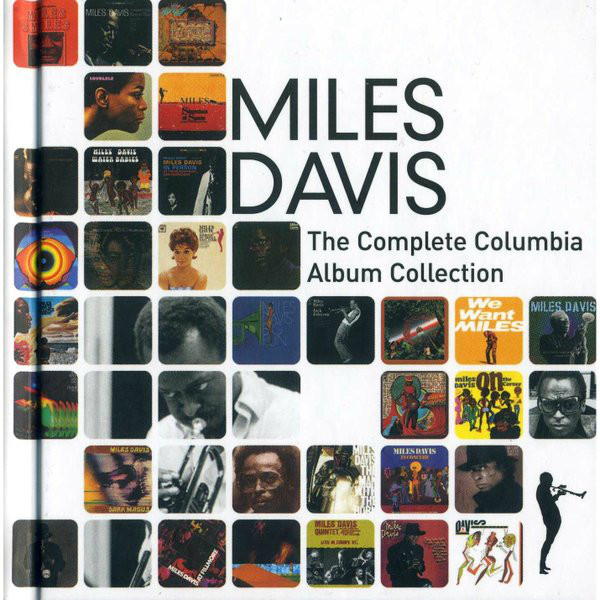
![MILES DAVIS - THE COMPLETE COLUMBIA ALBUM COLLECTION (2009) [MILES DAVIS QUINTET-LIVE IN EUROPE '67] [DVD5] [NTSC] [FALLEN ANGEL]](imgtorrent/1e4df9d5a2b53e11b371f77aaa786e2f1a789e0e_1767101333.jpg "MILES DAVIS - THE COMPLETE COLUMBIA ALBUM COLLECTION (2009) [MILES DAVIS QUINTET-LIVE IN EUROPE '67] [DVD5] [NTSC] [FALLEN ANGEL]")
![MILES DAVIS - THE COMPLETE COLUMBIA ALBUM COLLECTION (2009) [CD-AURA (1989)] [MP3@320] [FALLEN ANGEL]](imgtorrent/da2d0611cf29f4f82d573d6aefc76638edea9a30_1767099561.jpg "MILES DAVIS - THE COMPLETE COLUMBIA ALBUM COLLECTION (2009) [CD-AURA (1989)] [MP3@320] [FALLEN ANGEL]")
![MILES DAVIS - THE COMPLETE COLUMBIA ALBUM COLLECTION (2009) [CD-AURA (1989)] [WMA] [FALLEN ANGEL]](imgtorrent/653cd355cb14793577ca5edaa9f33d8cd8db6b37_1767099348.jpg "MILES DAVIS - THE COMPLETE COLUMBIA ALBUM COLLECTION (2009) [CD-AURA (1989)] [WMA] [FALLEN ANGEL]")
![MILES DAVIS - THE COMPLETE COLUMBIA ALBUM COLLECTION (2009) [CD-YOU'RE UNDER ARREST (1985)] [MP3@320] [FALLEN ANGEL]](imgtorrent/fb515572b756a3f78537bc1bc7ca055ede58e278_1766690077.jpg "MILES DAVIS - THE COMPLETE COLUMBIA ALBUM COLLECTION (2009) [CD-YOU'RE UNDER ARREST (1985)] [MP3@320] [FALLEN ANGEL]")
![MILES DAVIS - THE COMPLETE COLUMBIA ALBUM COLLECTION (2009) [CD-YOU'RE UNDER ARREST (1985)] [WMA] [FALLEN ANGEL]](imgtorrent/e21dc216919d2c93977e6ef162701a54af72d537_1766689863.jpg "MILES DAVIS - THE COMPLETE COLUMBIA ALBUM COLLECTION (2009) [CD-YOU'RE UNDER ARREST (1985)] [WMA] [FALLEN ANGEL]")
![MILES DAVIS - THE COMPLETE COLUMBIA ALBUM COLLECTION (2009) [CD-DECOY (1983)] [MP3@320] [FALLEN ANGEL]](imgtorrent/95cf35bebf366194b39c381010999700c5b5217b_1766687915.jpg "MILES DAVIS - THE COMPLETE COLUMBIA ALBUM COLLECTION (2009) [CD-DECOY (1983)] [MP3@320] [FALLEN ANGEL]")